Conventional Hex-X
Six equally spaced motors on carbon-fiber arms provide a symmetric baseline with established flight-control support. The tradeoff is a larger footprint and more structural material.
From custom airframes to flight controls, HUAC's UAV Team brings mechanical, electrical, and software engineering together to design, build, and test unmanned aircraft. Our Crimson VTOL Systems project is preparing for the 2027 Vertical Flight Society competition.
Crimson VTOL Systems · 2026–27
The Vertical Flight Society's Design-Build-Vertical Flight (DBVF) competition challenges university teams to develop an electric vertical takeoff and landing aircraft for a practical mission. The 2026–27 scenario focuses on search and rescue: maneuvering through constrained terrain, delivering supplies accurately, and retrieving a simulated survivor payload.
HUAC's current development program brings together airframe, payload, autonomy and ground-station, and power and controls work. The goal is reliable, precise flight and repeatable payload handling, supported by analysis, bench testing, and progressive flight validation.
Mission details and event dates: Official VFS competition page.
Current aircraft development
The team's configuration study compares structural mass, hover energy, thrust margin, cost, and integration risk. Two six-motor architectures remain under consideration; final selection will follow propulsion and structural testing.
Six equally spaced motors on carbon-fiber arms provide a symmetric baseline with established flight-control support. The tradeoff is a larger footprint and more structural material.
Three motors sit above and three below the arm plane, allowing adjacent propeller disks to overlap. The team is evaluating whether reduced size and structural mass outweigh rotor interference and mounting complexity.
Planned thrust-stand tests will measure propulsion performance and rotor interference. CAD and structural simulation will inform stiffness, deflection, and propeller clearance.
Payload mechanisms will progress through prototypes and tests alongside flight-control, navigation, telemetry, and ground-station integration.
Battery sizing and power distribution support the complete aircraft. Bench checks, loaded-flight testing, and mission rehearsals will guide refinement before competition.
2025–26 · First-generation aircraft
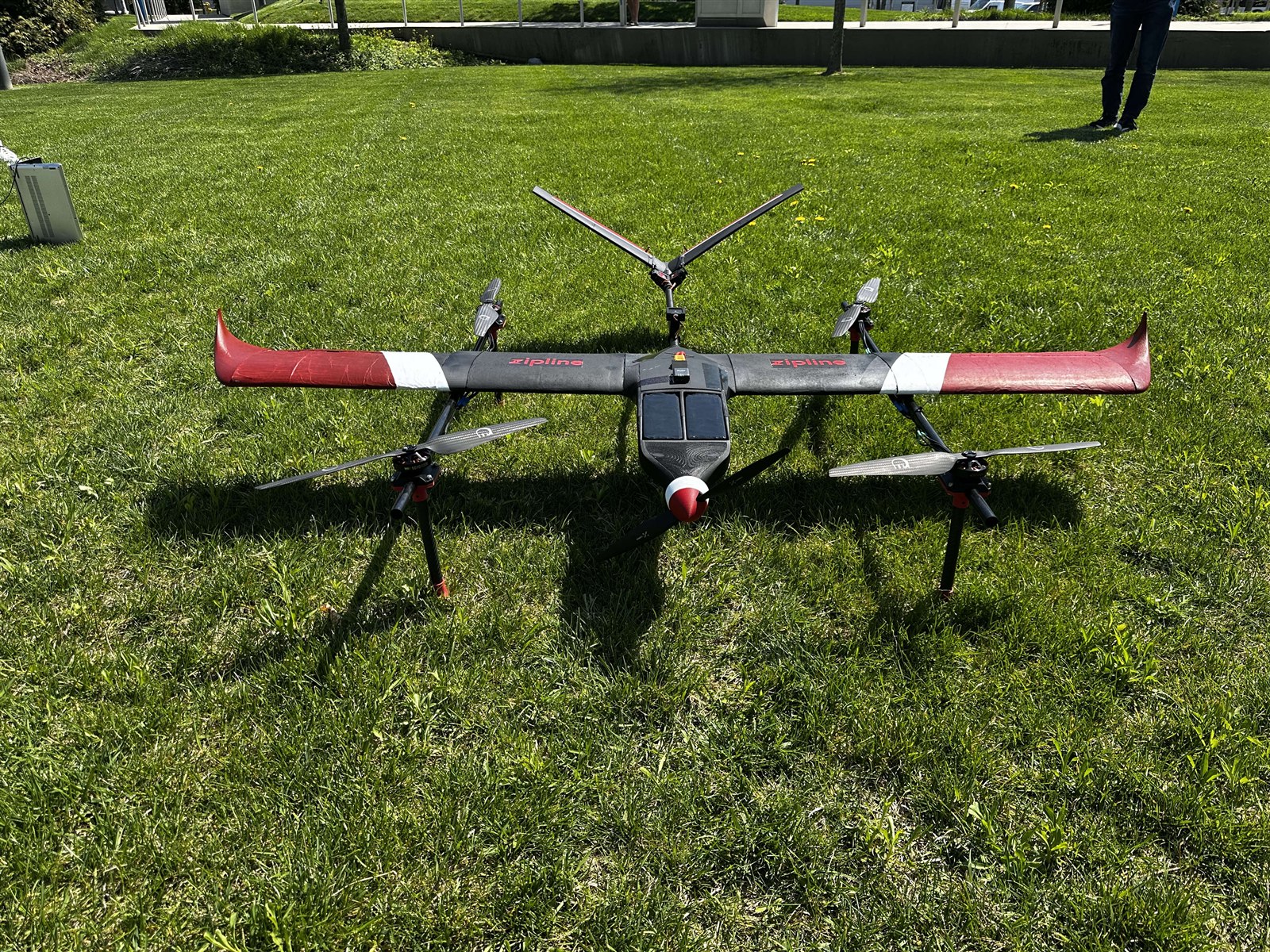
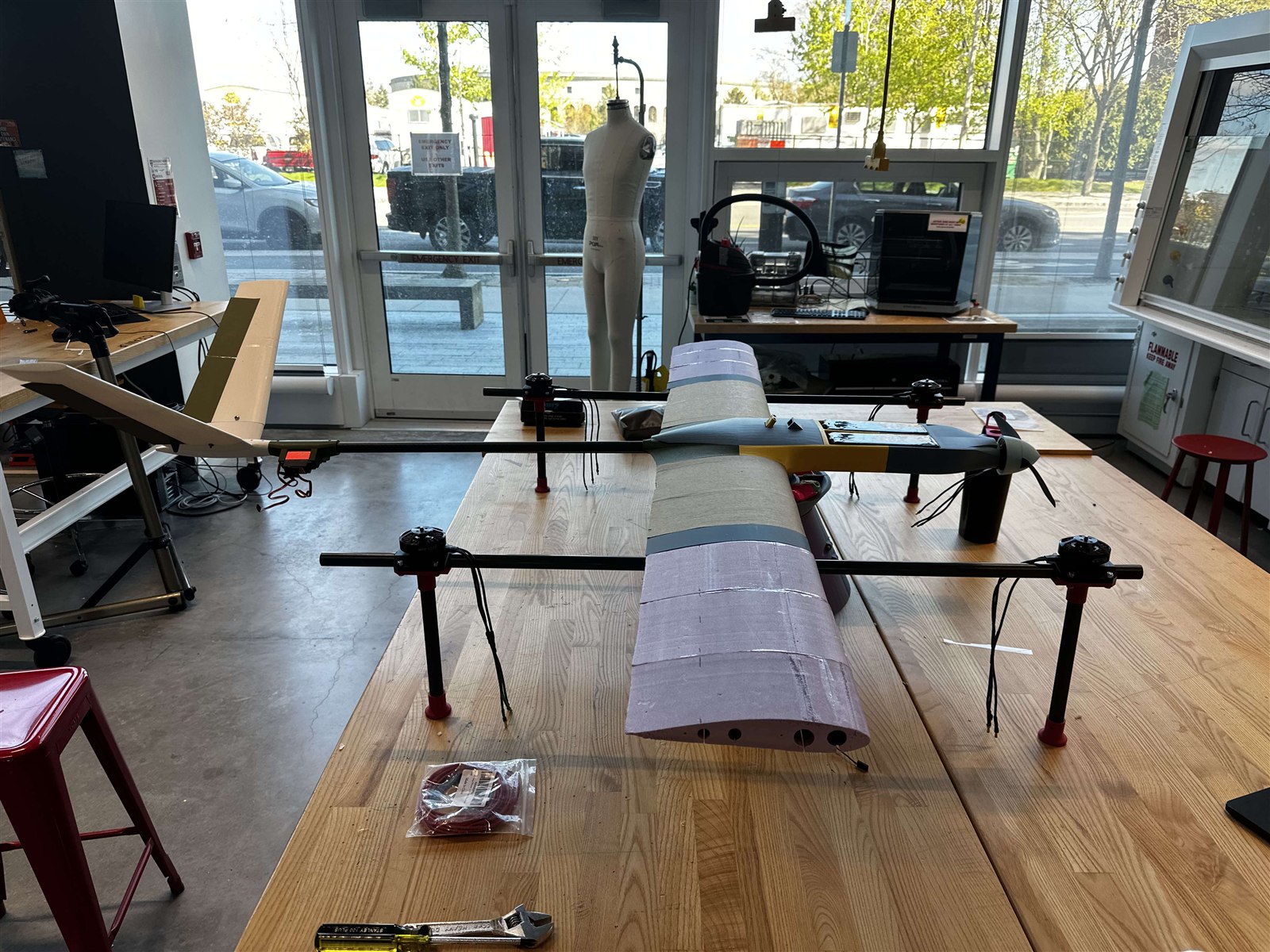
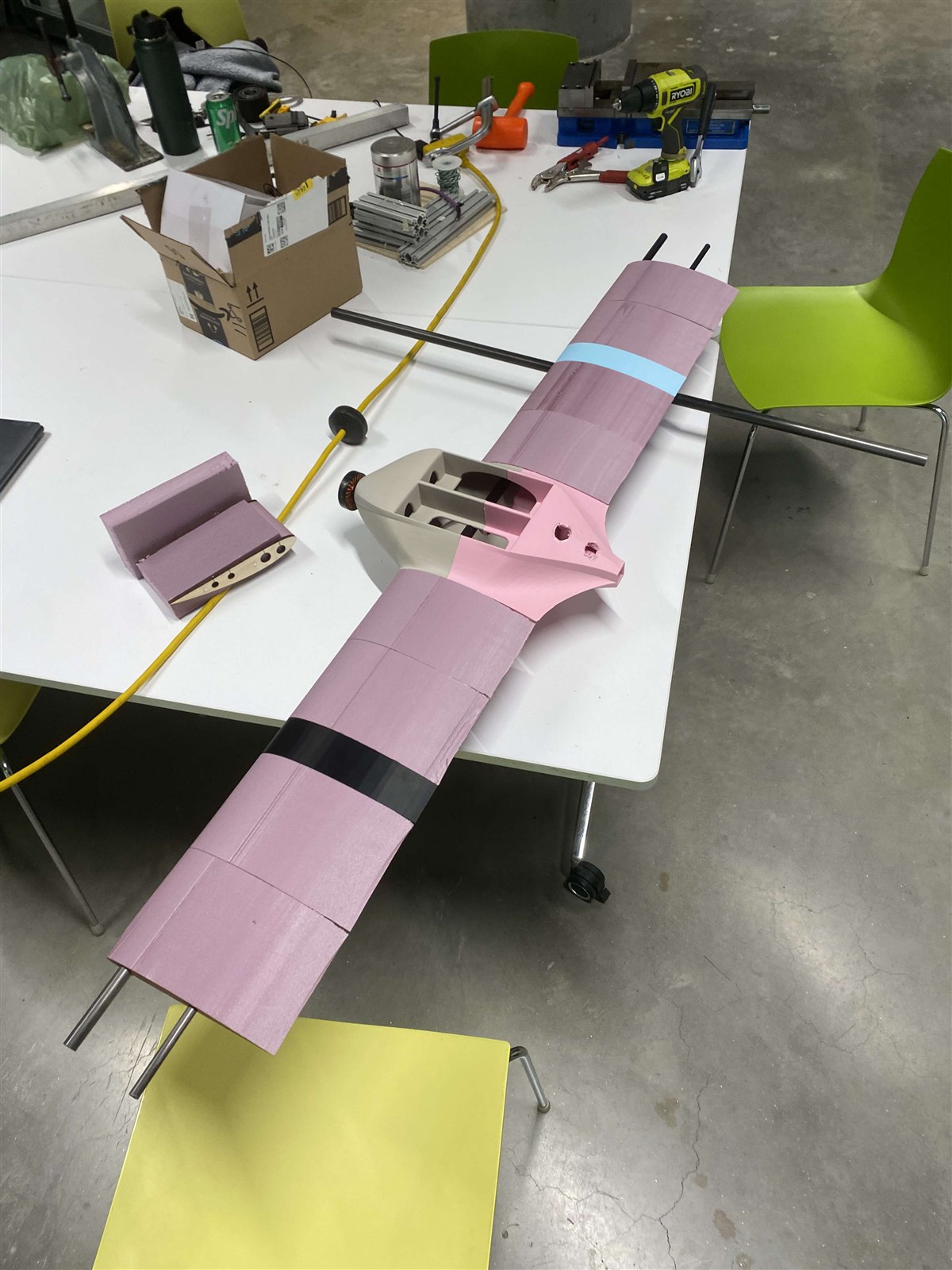
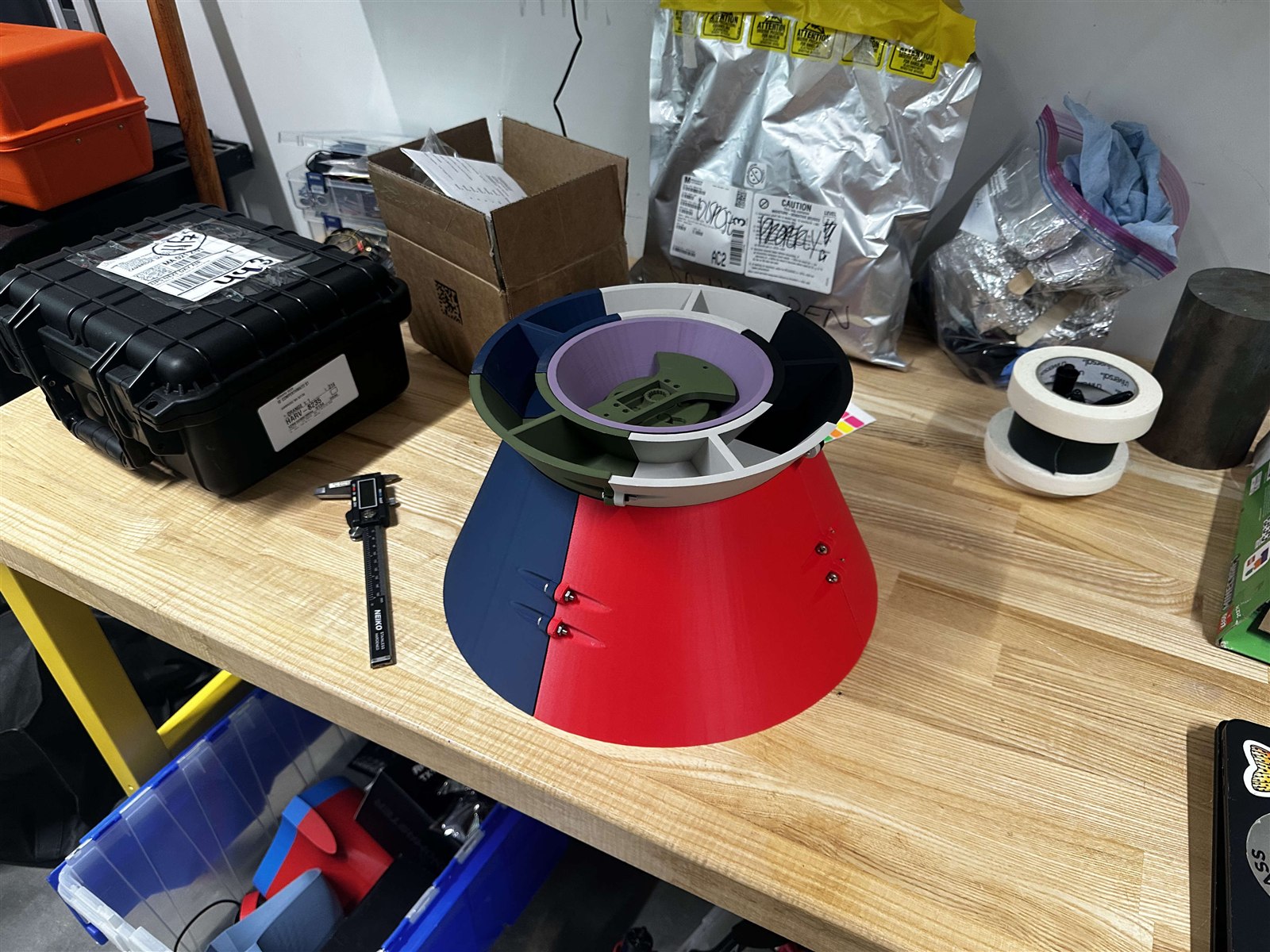
The team's first aircraft combined four vertical lift motors with a separate forward cruise motor, foam wings, carbon-fiber structure, and 3D-printed components. Developed around the previous season's wildfire-response scenario, it included a servo-driven mechanism for collecting and releasing sandbag payload bundles.
Students built and integrated the airframe, electronics, and payload system, including deployment and impact testing. The initial flight attempt exposed stability and structural weaknesses. Those lessons now inform a development approach with shorter design-build-test cycles and earlier validation of flight performance.
New-member projects · Fall 2026
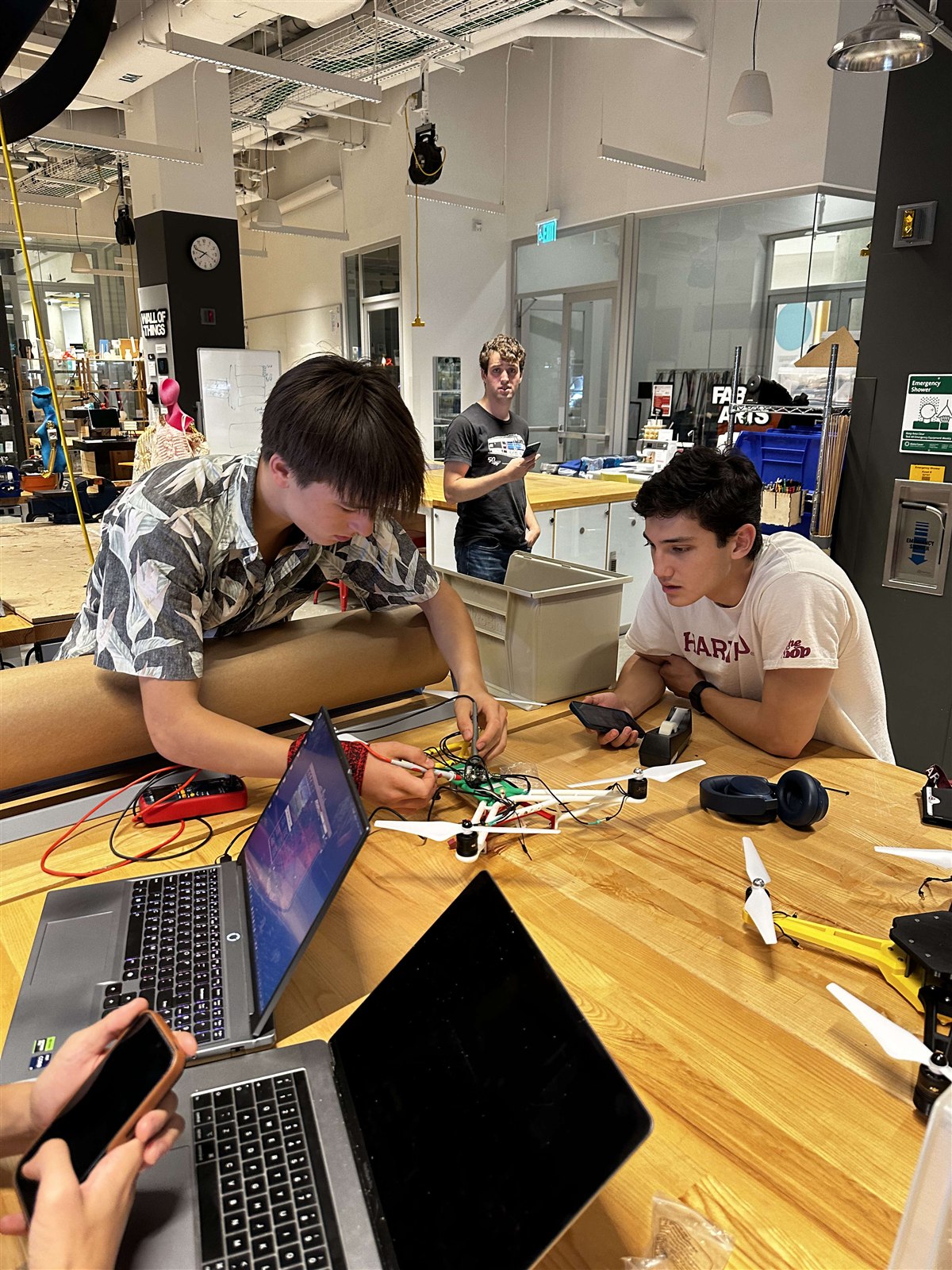
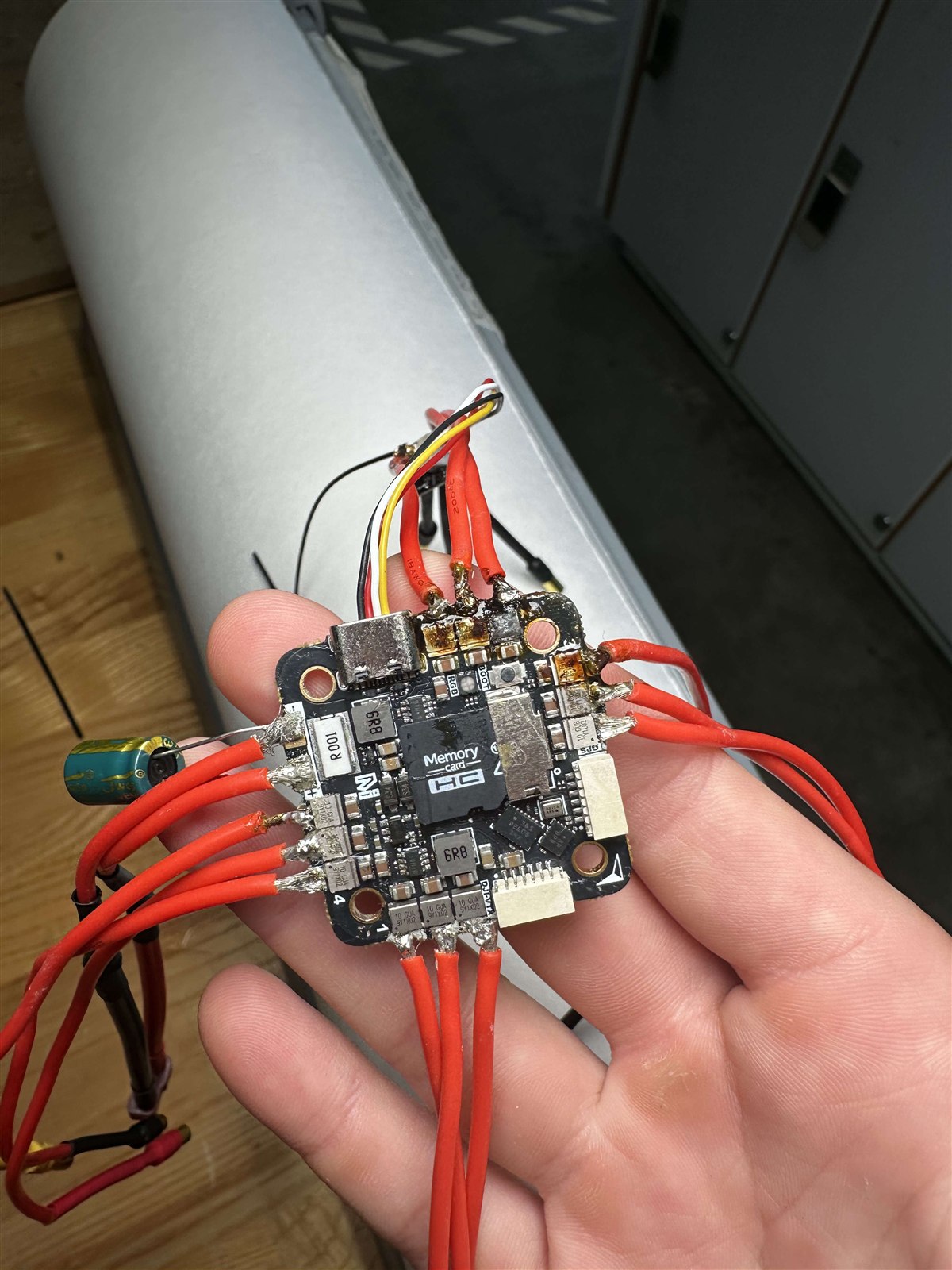
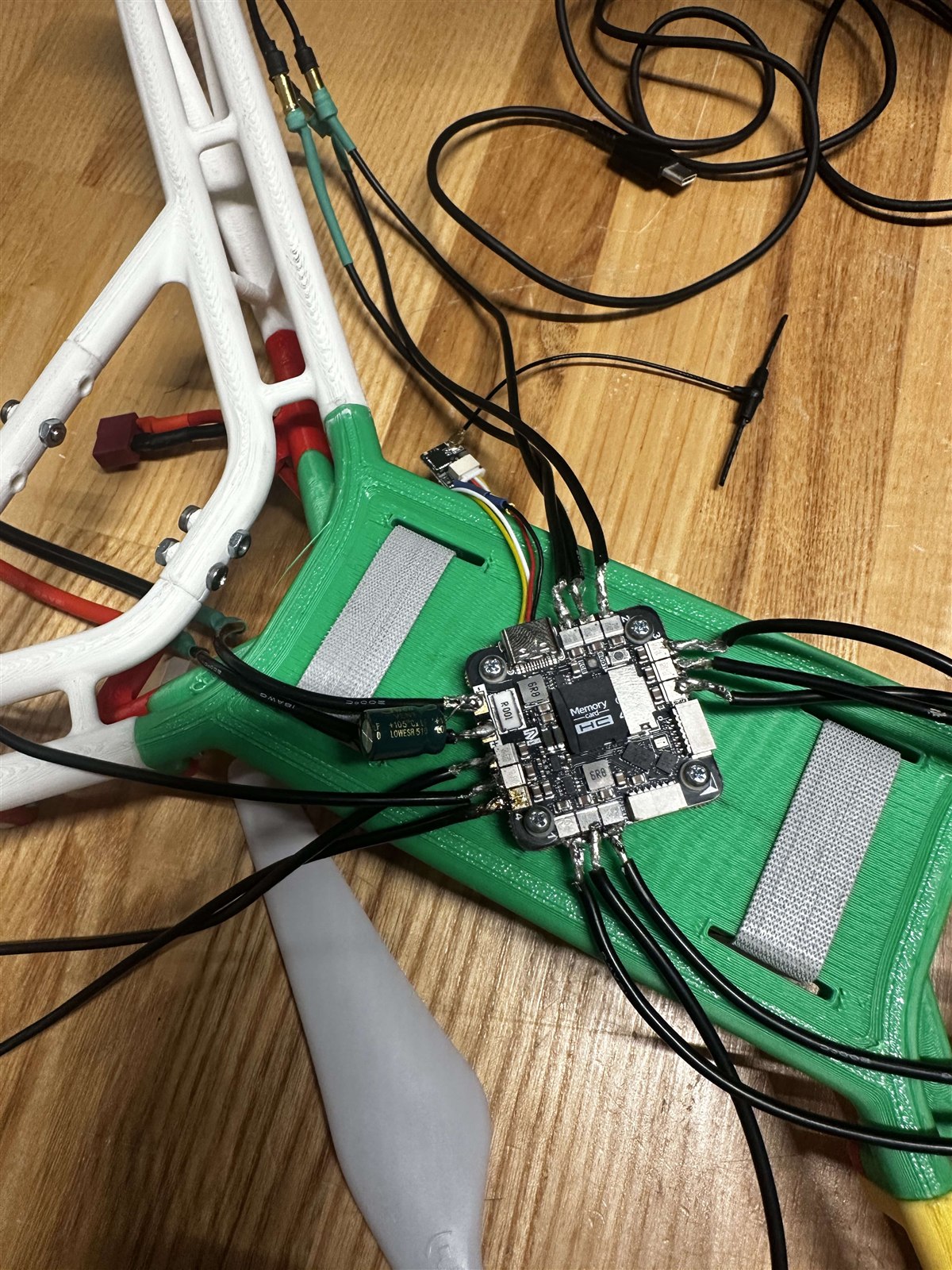
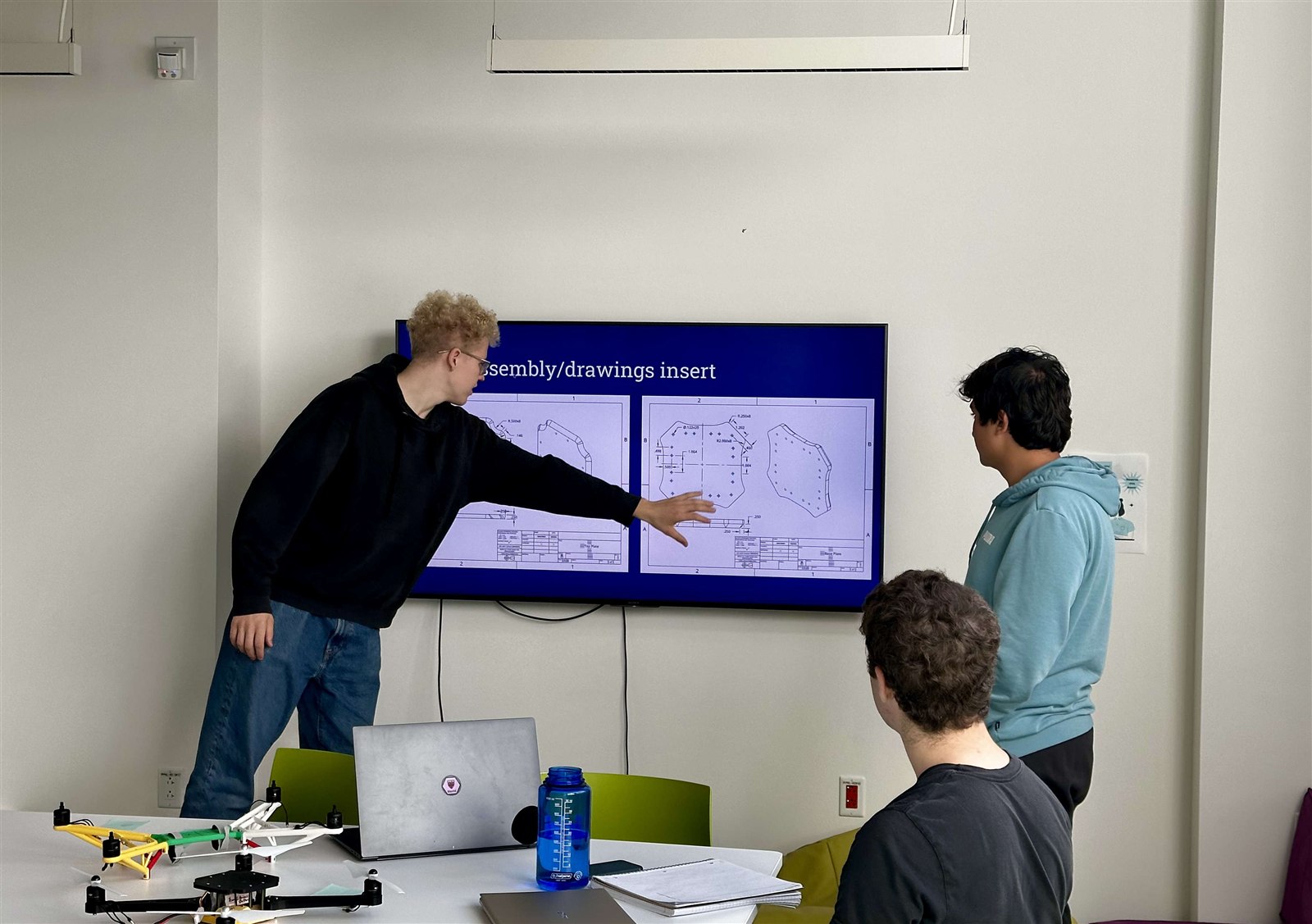
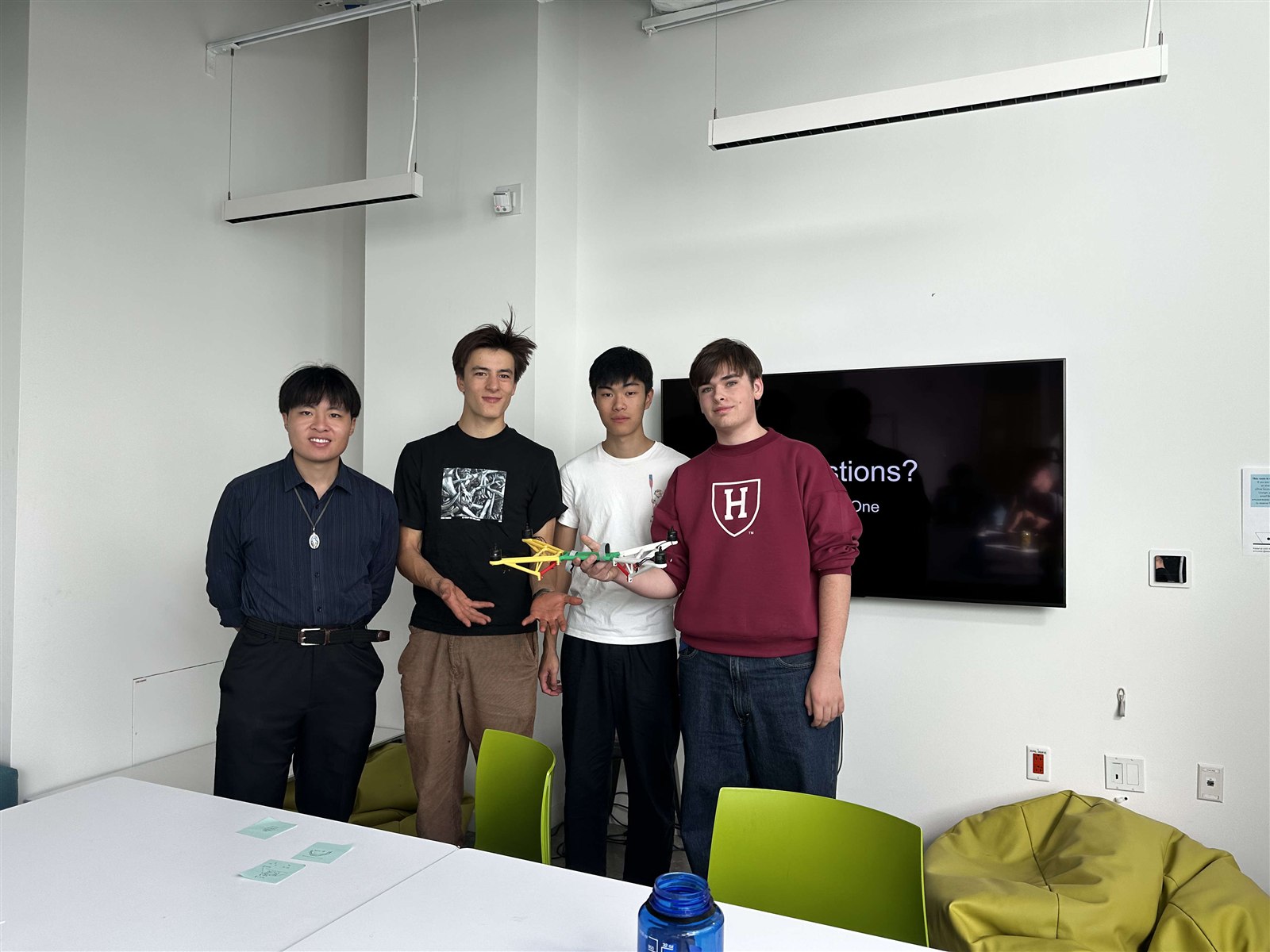
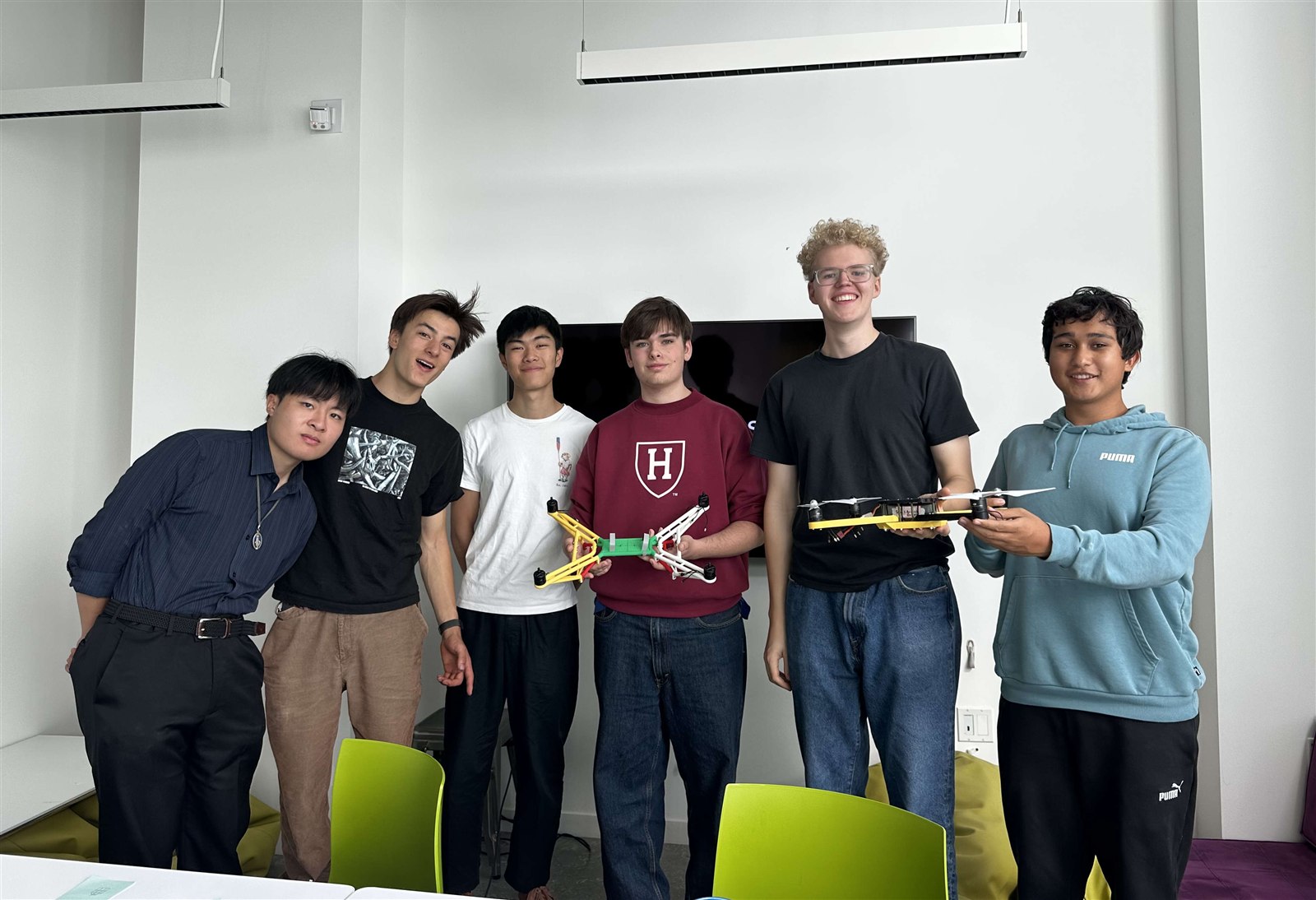
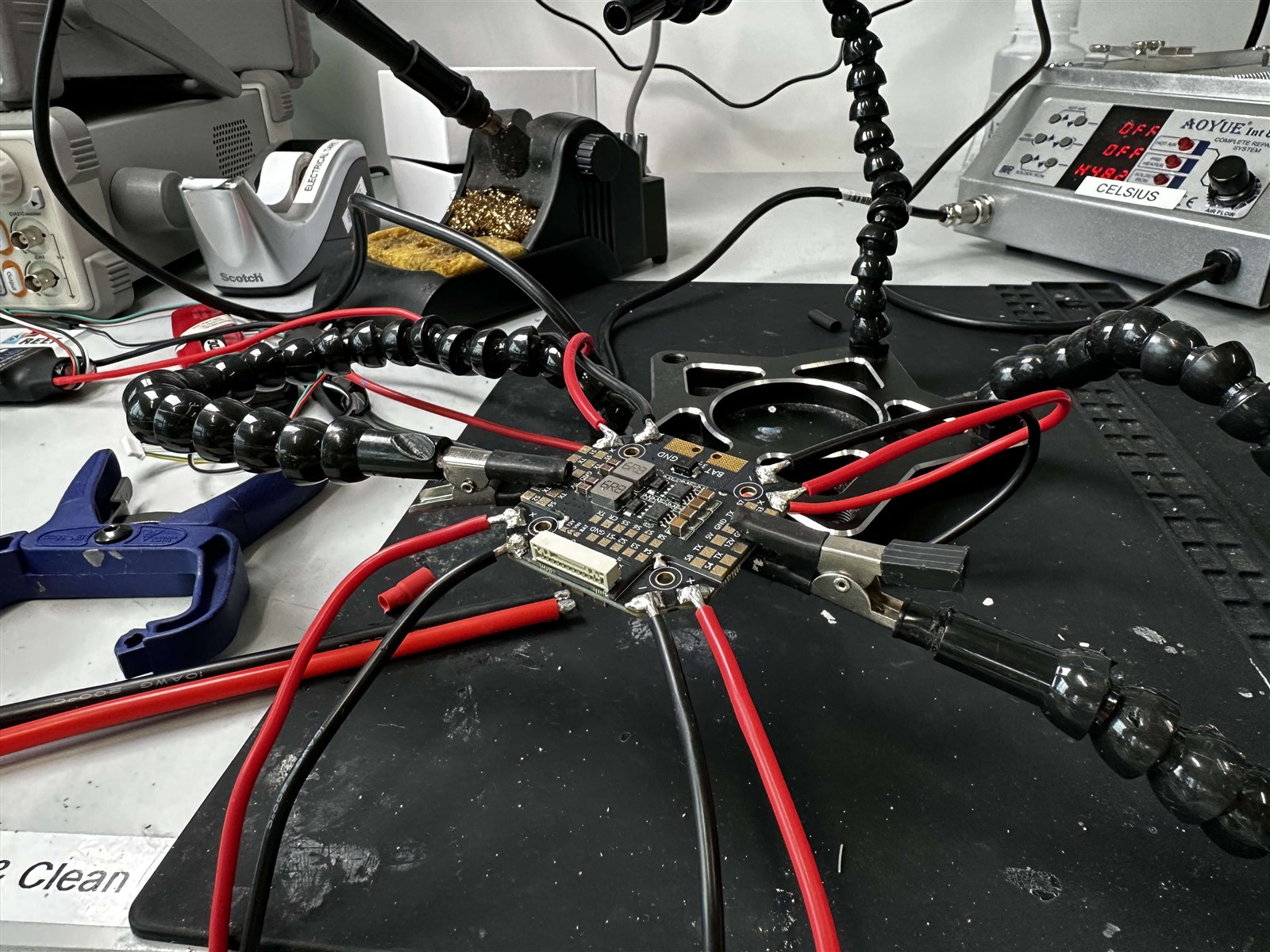
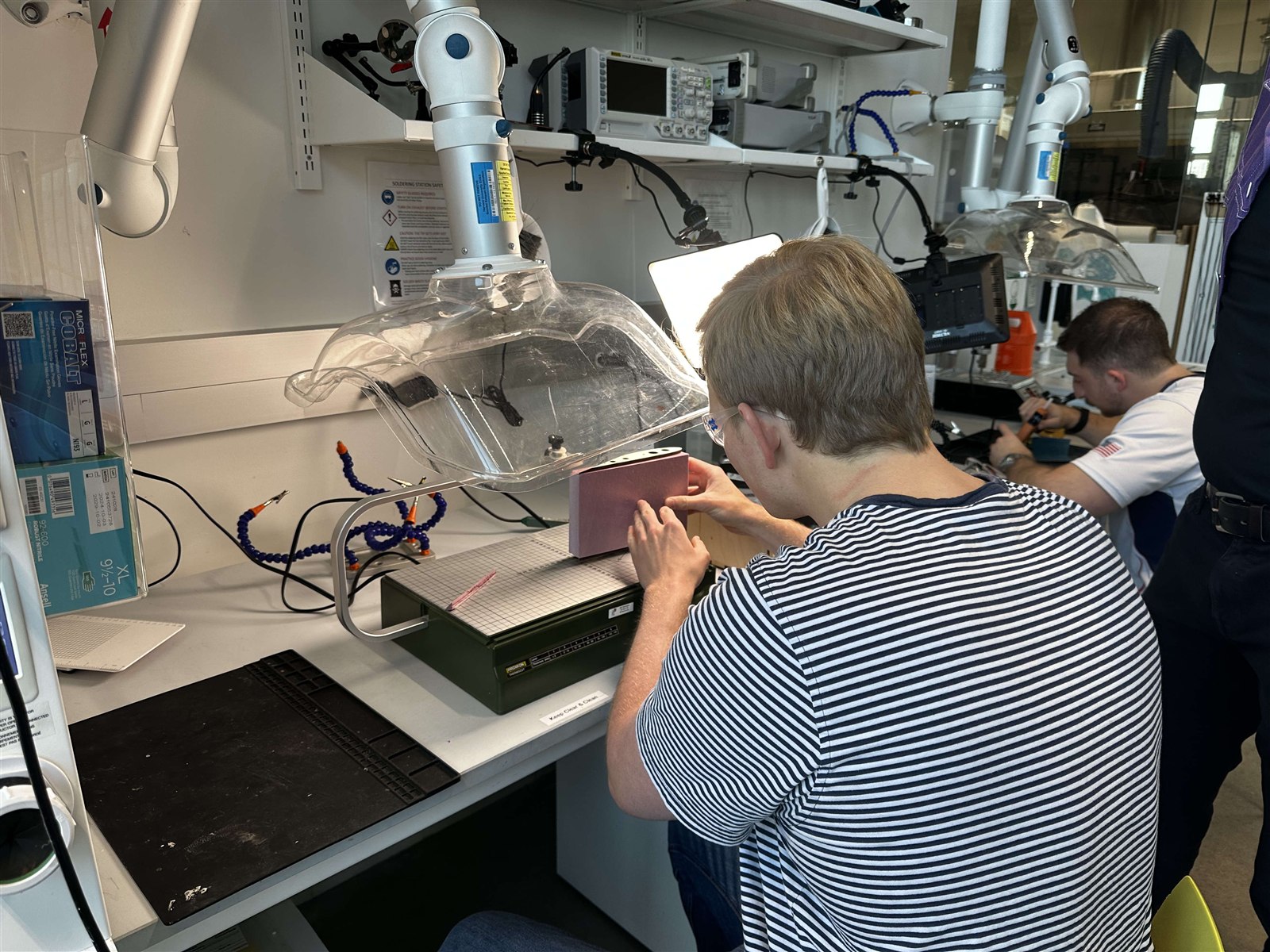
New members work in small teams to build a four-motor aircraft using shared electrical components. The project introduces airframe CAD, mounting structures, soldering, wiring diagrams, and ArduPilot configuration, followed by a design presentation and a fly-off intended to demonstrate steady flight and roll, pitch, and yaw control.